Oct 7, 2025
-

Ani Gottiparthy
AI is getting smarter at finding answers, but not all AI is created equal. If you follow OpenAI, Google, Perplexity, or any of the frontier model labs, you've probably heard of "Deep Research"—a new capability where AI agents go far beyond chat to actually research, analyze, and synthesize insights from live data.
This unlocks new potential for Competitive Intelligence (CI).
What's Different About Deep Research?
Let’s break down the evolution:
1. Pretrained Chat
This is what you get when you talk to ChatGPT or Claude out of the box.
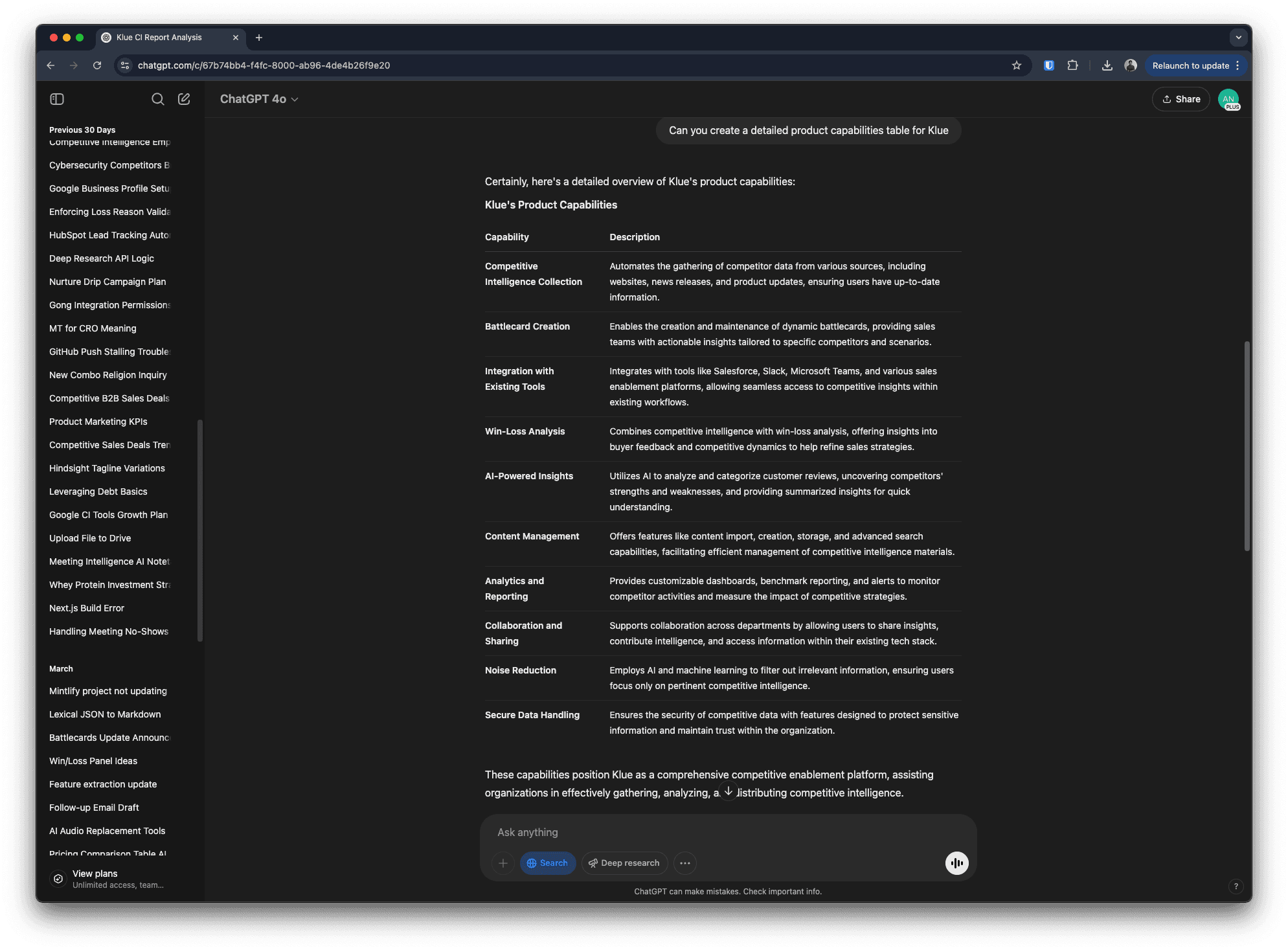
Ask ChatGPT something like "what are the key differences between <competitor A> and <competitor B>? If there's good information about them online, your assistant will be able to synthesize it for you.
This cann be useful for general knowledge and brainstorming, but it’s limited to what the model was trained on, and general search queries. That means anything recent, specific, or niche? You might be out of luck. For high-level queries about established competitors, this is a great starting point.
2. AI + Search
Tools like Perplexity combine a language model with web search. This adds freshness and links to sources, which is great—but it's still surface-level.
Tip: ensure your AI is sourcing from reputable sources. Review sites have been gamified, and blog posts are littered with misinformation. We recommend using only verified sources and documentation sites.
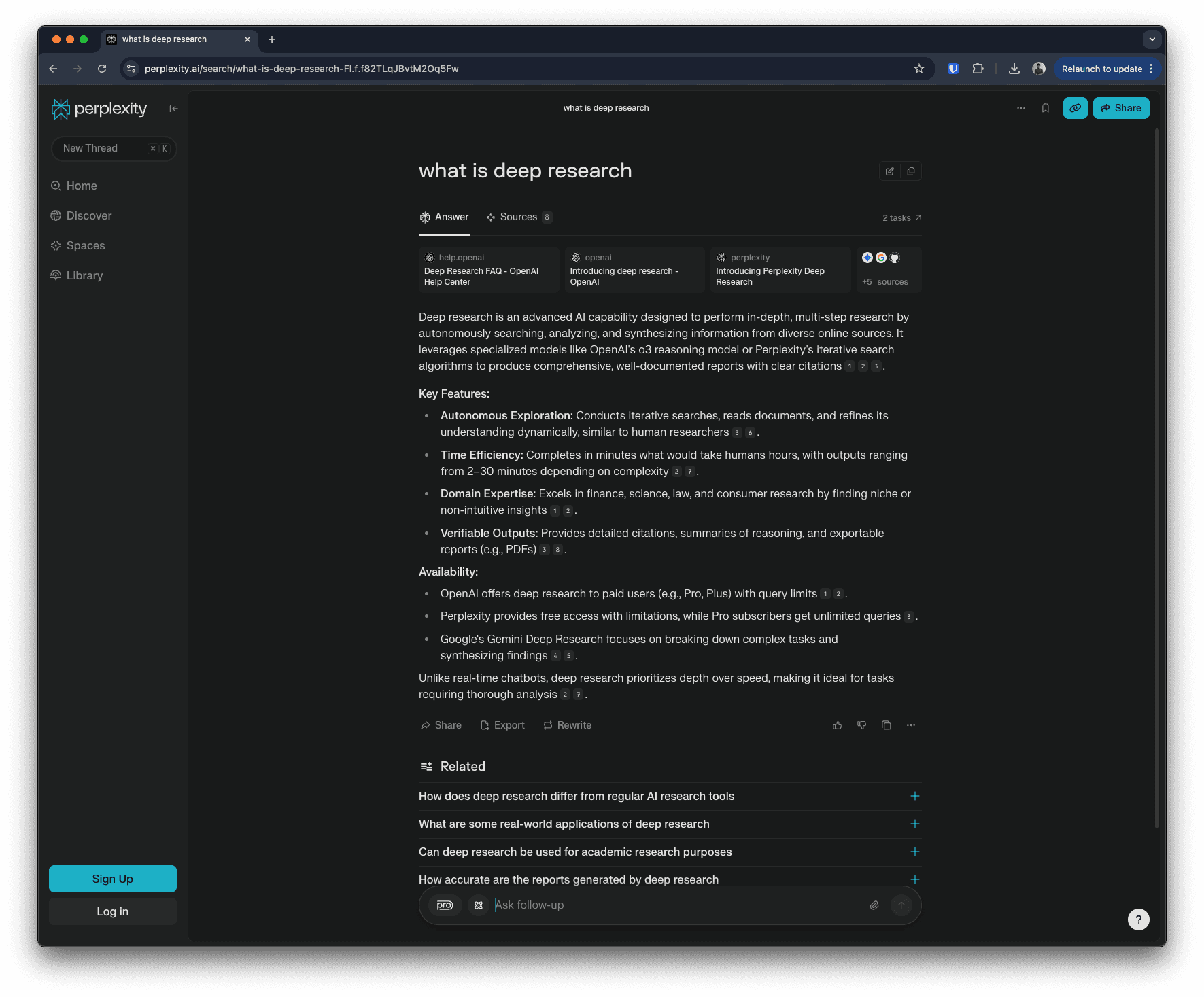
3. Deep Research
Deep Research chains together multiple AI agents and adds real planning and iteration to the mix. Here’s what that looks like:
The AI plans a research strategy based on your query—identifying sub-questions, target sources, and expected outcomes.
It executes scoped searches, often diving into web pages, documents, or even PDFs.
It reasons over the results: cross-referencing facts, comparing statements, and identifying contradictions or gaps.
It refines its search: if early answers are weak, it re-queries with improved focus, digs into related angles, and pivots when needed.
The output reflects insights pulled from hundreds of sources, synthesized into a clear, structured summary—often with citations, comparisons, and high-level takeaways.
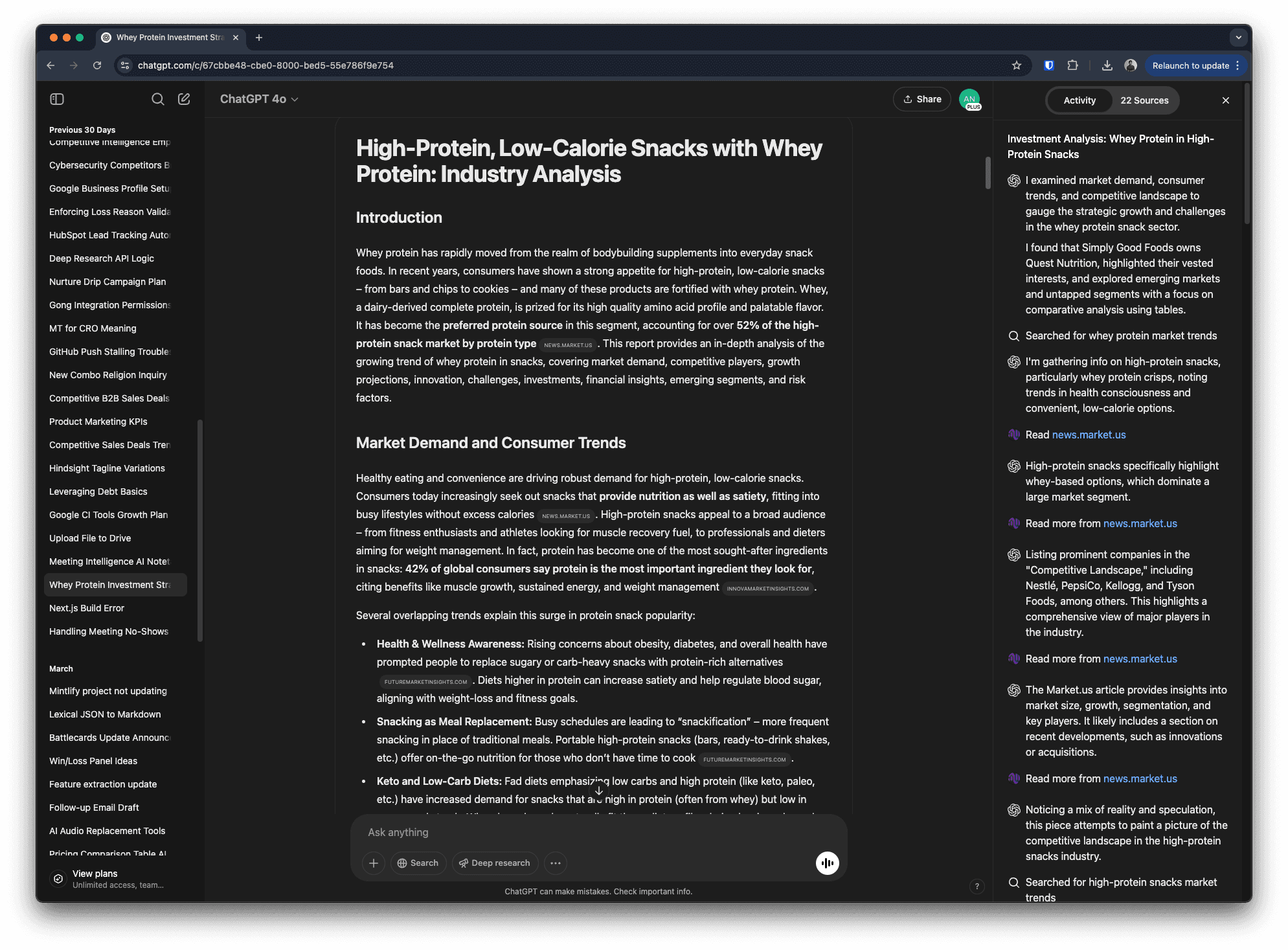
Think of it like a junior analyst who doesn't sleep and reads faster than any human.
How This Helps With CI
For competitive intel, Deep Research can be a powerful starting point. In minutes, you can:
Spin up feature comparison tables
Draft SWOT analyses on competitors
Identify pricing shifts or product launches
It’s a great way to get moving quickly—especially when you're breaking into a new market or tracking a new entrant.
Where It Falls Short
But like any one-off research sprint, Deep Research is only as good as the moment it runs. It doesn't:
Keep your insights updated as things change
Prioritize based on your sales motion
Integrate private signals like your CRM, sales calls, or analyst notes
And here’s the bigger issue: the best competitive intelligence doesn’t always come from the web. It comes from:
What prospects are saying in your calls
Feedback from late-stage deals
Primary research and analyst notes
What this means for CI
Providing your team with surface-level updates about competitors won't cut it anymore. That information is available to anyone in a few seconds.
Product Marketing and CI teams are switching their focus to strategic, higher-value tasks - like analyzing deals (aka Win-Loss Analysis).
Now you can also spend less time on "data collection", and more time on data synthesis and creating strategic recommendations. We see PMMs becoming truly valuable strategic partners to sales, marketing, and product teams now that they have time and resources to dig into the data.
Why We Built This Into Hindsight
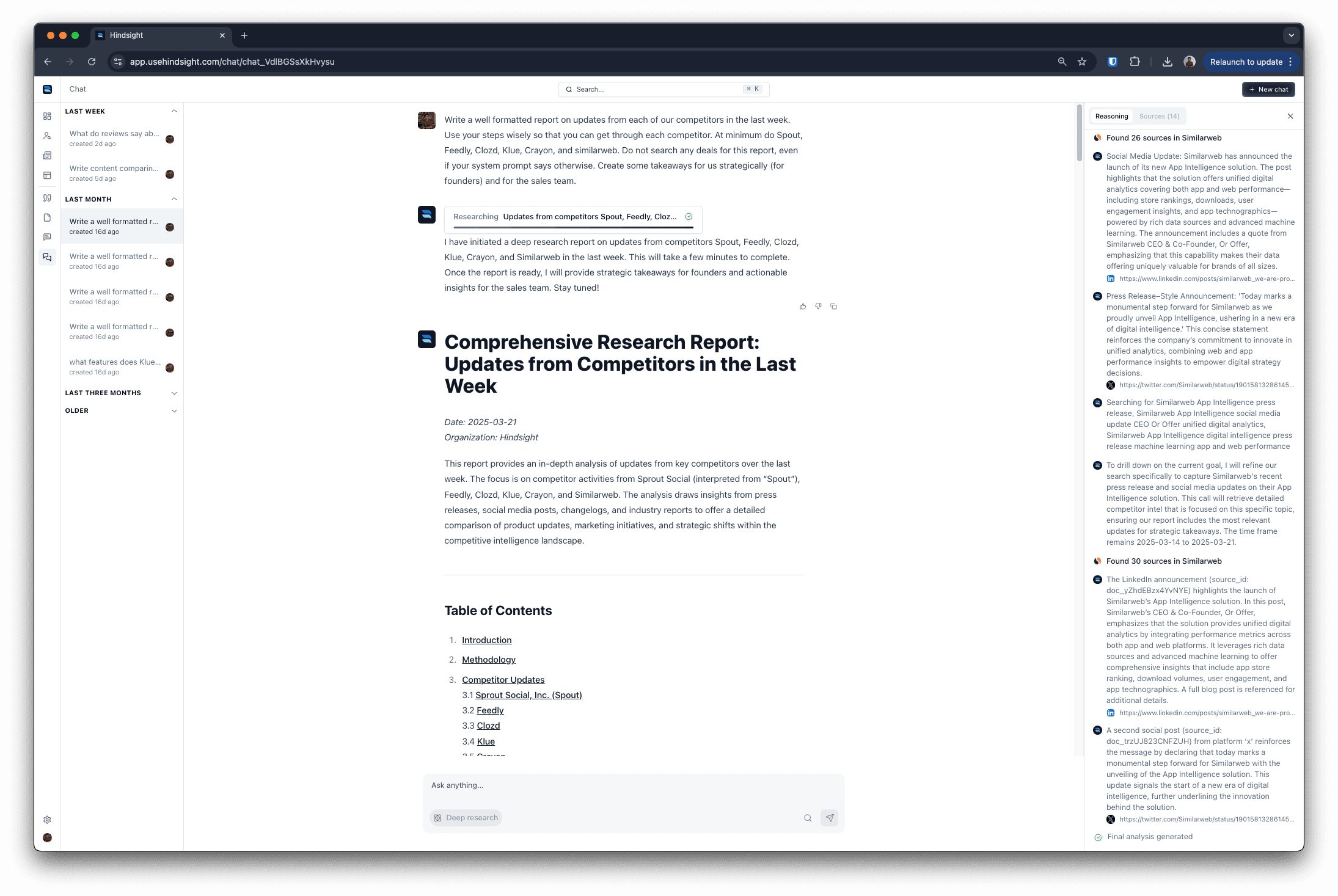
We took Deep Research and made it continuous, curated, and contextual:
Runs and updates daily so your CI is never stale
Curates sources you care about (like your competitor’s docs, help centers, and blogs)
Pulls in harder-to-track signals like ad campaigns, industry research, transcript data, and deal notes
Includes your internal knowledge—like call recordings, CRM fields, and primary research—so your CI isn’t just broad, it’s relevant
Integrates into other workflows-like sending new findings in Slack, updating battlecards, and creating reports.
Hindsight gives you a full-time AI CI analyst—not just a one-time dump—with the same simple, useful UX you'd expect from a Deep Research tool.
If you want to stop hunting for answers and start seeing around corners, check out Hindsight.